
HMS: Powertrain Specialists Since 1972
The global mining equipment market is on a trajectory that would have seemed improbable just five years ago. Industry analysts now project the sector will reach $194 billion by 2033, driven by an insatiable appetite for critical minerals, fleet modernization mandates, and the sheer physical toll that record-production schedules inflict on heavy machinery. For operators running wheel loaders in copper pits, dozers on lithium projects, and haul trucks through iron ore corridors, the consequences of this boom land squarely on one component category that rarely makes headlines: the off-highway torque converter.
Torque converters sit at the heart of every automatic-transmission-equipped piece of heavy equipment, translating engine output into the controlled rotational force that moves payload. When they perform correctly, nobody notices. When they fail, entire operations grind to a halt—and in today's demand environment, the financial penalties for downtime have never been steeper.
The Numbers Behind the Surge
U.S. mineral production value climbed 5.6 percent to $112 billion in 2025, according to the U.S. Geological Survey's annual Mineral Commodity Summaries. Mineral-reliant industries now represent more than $4 trillion in economic activity—over one-eighth of the American economy. World lithium production alone rose 31 percent last year, and copper demand is on track to climb 70 percent by 2050 as electrification reshapes global supply chains. The USGS reports that net imports of processed metals and materials more than doubled by value in 2025, underscoring how aggressively nations are stockpiling and processing the raw materials that keep modern economies running.
All of this extraction requires machinery—and lots of it. The global surface mining fleet alone exceeded 240,000 major units at the end of 2025, with active machine counts forecast to reach nearly 239,000 by 2030. Trucks account for 62 percent of that fleet, and ultra-class machines exceeding 1,000 horsepower are growing fastest as operators chase ton-per-kilometer efficiency gains. Every one of those machines depends on a torque converter to transfer engine power to the drivetrain smoothly and reliably under punishing conditions.
The equipment expansion isn't limited to mining. Construction activity fueled by infrastructure legislation, data center buildouts, and reshoring initiatives is placing parallel demands on loaders, dozers, graders, and scrapers. Agricultural operations are scaling to meet food security targets. Material handling facilities are expanding to support e-commerce logistics. Each sector consumes torque converters across different size classes, from compact C270 units in forklifts to mid-range C2000 and C5000 converters in construction equipment to heavy-duty C8000 and C9000 models in mining trucks.
Why Torque Converters Bear the Brunt
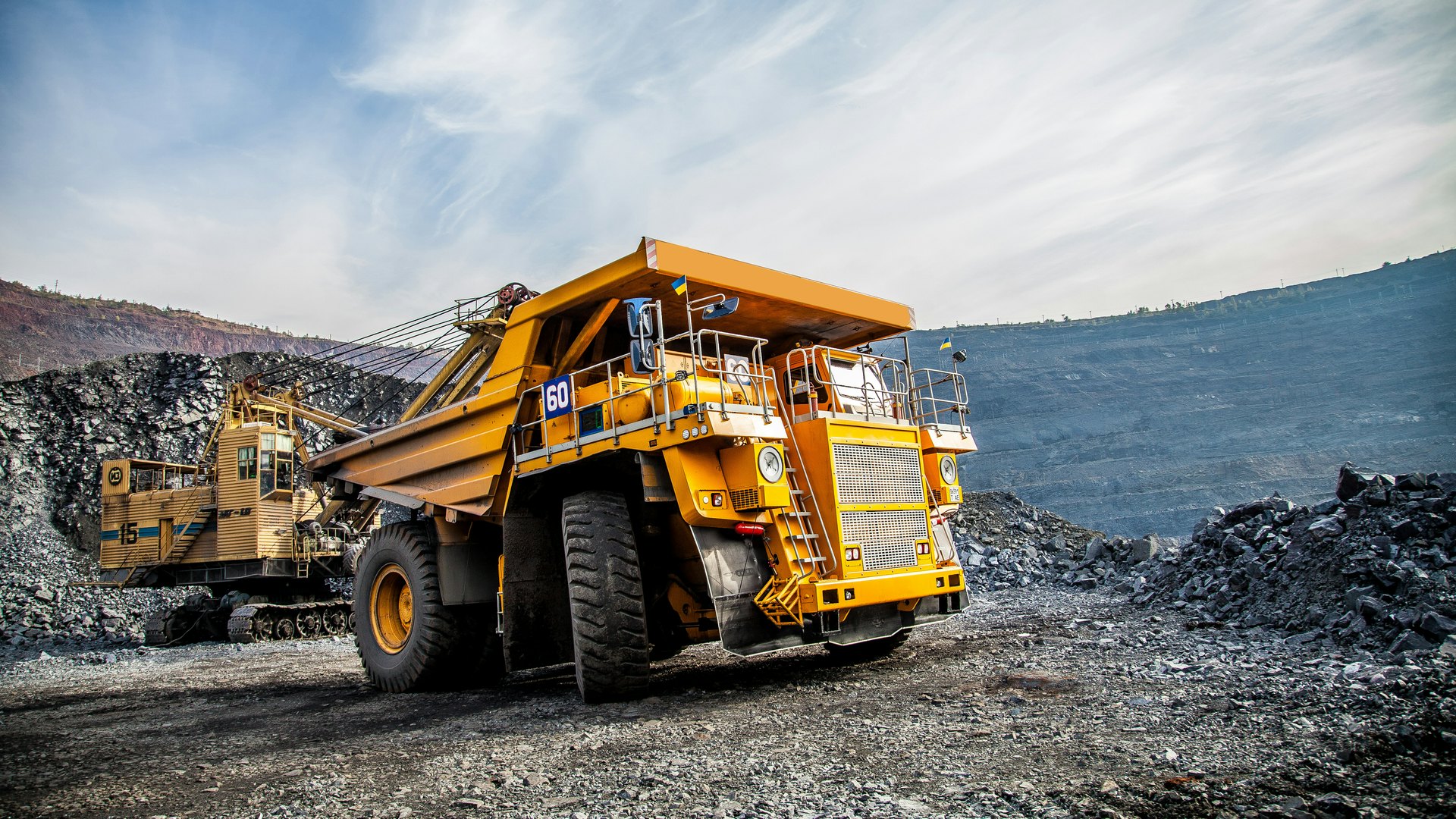
Off-highway torque converters operate in environments that would destroy most automotive-grade components within weeks. Mining trucks haul 200-ton payloads up steep grades in temperatures ranging from minus-forty to well over one hundred degrees Fahrenheit. Construction loaders cycle thousands of times per shift, subjecting converter internals to relentless thermal and mechanical stress. The hydraulic fluid inside a converter can exceed 300 degrees during sustained heavy-load operation, and each heating cycle degrades the fluid's viscosity and lubricating properties incrementally.
When these components fail, the consequences are immediate and expensive—industry data puts unplanned heavy-equipment downtime costs between $5,000 and $260,000 per hour depending on the operation. A single haul truck breakdown on a mine's critical path doesn't just idle one machine; it disrupts loading sequences, backs up other trucks, and can reduce the entire site's daily tonnage output. Understanding how Heavy Equipment Downtime Now Costs Up to $260,000 Per Hour—Why Torque Converter Failures Top the Breakdown List reveals the true financial exposure operators face when powertrain components give out at the worst possible moment.
The problem intensifies as operators push aging fleets harder to meet surging demand. New equipment lead times have stretched to six months or longer for some models, forcing operations to extend service intervals and defer rebuilds on machines already running beyond original design life. A torque converter rated for 10,000 hours that gets pushed to 14,000 doesn't decline linearly—it approaches a cliff where internal wear accelerates rapidly and catastrophic failure becomes a matter of when, not if.
Regulatory Standards Raise the Stakes
Federal oversight adds another dimension to the torque converter maintenance equation. The Mine Safety and Health Administration enforces strict federal standards requiring that self-propelled mobile equipment maintain functional braking and drivetrain systems at all times. Under 30 CFR Part 56, defects affecting safety must be corrected immediately or documented until repaired. MSHA inspects every surface mine at least twice annually and every underground mine at least four times per year, and inspectors can arrive without advance notice.
A torque converter exhibiting slippage, overheating, or erratic stall behavior doesn't just risk a breakdown—it risks a regulatory citation and, more importantly, a safety incident. Equipment that cannot maintain predictable power delivery on haul roads, ramps, or working faces represents a hazard to operators and nearby personnel. MSHA's 2025 rulemaking activity, which included 18 proposed rule changes affecting mobile equipment safety programs, signals that regulatory scrutiny of equipment maintenance is intensifying rather than easing.
For operations in construction and agriculture, OSHA standards impose parallel requirements for equipment maintenance and safe operation. The regulatory environment across all heavy-equipment sectors is converging on a common expectation: operators must demonstrate proactive, documented maintenance programs rather than reactive repair approaches.
The Parts Supply Chain Under Pressure
Demand for replacement torque converters and powertrain components is accelerating at the same pace as new equipment orders. Lead times for some converter models have stretched considerably as foundries, machining centers, and assembly lines struggle to keep up. The same minerals driving the extraction boom—copper, specialized steels, engineered alloys—are inputs for the parts that keep extraction equipment running. When commodity prices surge across the board, manufacturing costs for powertrain components rise in lockstep.
Operators who once stockpiled spare converters as routine practice now find inventory harder to secure, particularly for heavy-duty and ultra-class units serving mining applications. This supply crunch creates a strategic imperative: operators must plan powertrain maintenance proactively rather than reactively. Companies maintaining relationships with specialized parts suppliers who carry deep, genuine OEM inventory gain a measurable advantage in uptime over those scrambling for components after a failure occurs.
The broader implications for component sourcing are examined in Critical Minerals Rush Forces Operators to Rethink Heavy Equipment Parts Supply Chains, where the intersection of mineral demand and parts availability creates new risks for unprepared operators.
What Operators Should Watch in 2026
Several trends deserve close attention. First, the shift toward higher-horsepower equipment concentrates more stress on fewer, larger powertrain components—meaning a single torque converter failure on an ultra-class truck carries outsized consequences for daily production targets. Second, fleet age is climbing in many operations as delivery times for new equipment stretch past twelve months, making rebuilds and genuine replacement parts essential to maintaining productivity. Third, regulatory pressure around equipment safety continues tightening globally, with MSHA's recent rulemaking activity signaling more scrutiny of mobile equipment maintenance programs.
Fourth, the aftermarket parts landscape is growing more complex as counterfeit and substandard components enter distribution channels, creating quality risks for operators who source from unfamiliar suppliers. Genuine OEM components manufactured to original specifications remain the only reliable path to achieving rated converter performance and service life in demanding off-highway applications.
For operations running Dana Spicer-equipped machinery—from C270 series converters in forklifts and material handlers to C16000 units in the largest mining trucks—access to genuine parts and specialized technical knowledge is no longer a convenience. It is a competitive necessity that directly impacts uptime, safety compliance, and bottom-line profitability.
HMS: Your Partner in Off-Highway Powertrain Solutions
HMS has specialized exclusively in Dana Spicer Clark-Hurth powertrain products for over 50 years. Our team of experienced engineers provides the technical expertise and genuine parts inventory that keep heavy equipment running in the world's most demanding operations.
Our Services Include:
- Genuine Dana Spicer Torque Converters and Parts — Complete inventory spanning C270 through C16000 series for immediate availability
- Powertrain Repair and Rebuild Services — Factory-authorized diagnostics, rebuilds, and testing for torque converters, transmissions, and axles
Ready to Protect Your Uptime? Contact HMS to discuss your torque converter requirements and ensure your fleet stays productive.
Works Cited
"Value of U.S. Mineral Production Rose Last Year, Driven by Precious Metals Prices." U.S. Geological Survey, U.S. Department of the Interior, 6 Feb. 2026, www.usgs.gov/news/national-news-release/value-us-mineral-production-rose-last-year-driven-precious-metals-prices. Accessed 25 Feb. 2026.
"Regulations." Mine Safety and Health Administration, U.S. Department of Labor, www.msha.gov/regulations. Accessed 25 Feb. 2026.
Related Articles
- Heavy Equipment Downtime Now Costs Up to $260,000 Per Hour—Why Torque Converter Failures Top the Breakdown List
- Critical Minerals Rush Forces Operators to Rethink Heavy Equipment Parts Supply Chains